SETAF Southern European Task Force, U.S. Army Africa A History from the US Army:
“SETAF was formally activated during a ceremony October 25, 1955. The headquarters, commanded by Maj. Gen. John Michaelis, was temporarily established at Camp Darby with units stationed in Vicenza and Verona. Shortly after activation, SETAF moved its headquarters to Verona. Troop strength reached 10,000 and SETAF was formally established with a U.S.-Italian agreement.
In 1959 a third agreement brought significant changes to SETAF, to include assigning Italian Army personnel to the SETAF general staff to assist with unique bi-national responsibilities.
In 1963, SETAF lent a helping hand to our Italian neighbors when a huge landslide forced a deluge of water over the Vajont Dam in the Piave Valley killing more than 2,000 people. SETAF helicopters were the first on the scene to provide assistance.
Its headquarters moved again in 1965 to Caserma Carlo Ederle in Vicenza. SETAF’s mission and geographical area of responsibility increased in 1972 when the command enlarged its signal support unit and took control of two Army Artillery Groups in Greece and Turkey. With the assignment of the 1st Battalion, 509th Infantry (Airborne Battalion Combat Team) in 1973, SETAF accepted the missions of maintaining and deploying the battalion on its own or as part of the Allied Command Europe Mobile Force (Land).
Throughout the 1970s and 80s, SETAF continued its tradition of helping out our Italian neighbors whenever disaster struck. Until 1992, SETAF was considered to be a logistical command, but changes in Europe in 1989 and 1990 resulted in new missions. SETAF shifted focus to regional tactical operations as a command and control headquarters for Army and Joint units. In March 1991, SETAF’s 3rd Battalion (Airborne), 325th Infantry Regiment, deployed to northern Iraq during Operation Provide Comfort, the U.S. led humanitarian mission to feed and provide other life support for thousands of displaced Kurds.
In July 1994, SETAF deployed to Entebbe, Uganda as the core staff of Joint Task Force Support Hope. A total of 2,100 U. S. military personnel, including SETAF’s 3rd Battalion (Airborne), 325th Infantry Regiment, deployed to the region to help prevent a humanitarian crisis resulting from large-scale refugee movements caused by the civil war in Rwanda. SETAF demonstrated its role as the theater’s reaction force in December 1995 by deploying as the lead element of the Dayton Peace Accord implementation forces into Bosnia-Herzegovina. April 1996 proved to be exceptionally busy: Elements of the SETAF Infantry Brigade deployed to Dubrovnik, Croatia to secure the crash site of U.S. Treasury Secretary Ron Brown’s plane. Another company-plus deployed to Monrovia, Liberia with special operations forces to facilitate noncombatant evacuation operations.
In November 1996, portions of the SETAF-led Joint Task Force Guardian Assistance deployed to Uganda and Rwanda to assess the needs of Rwandan refugees in Zaire. In March 1997, a SETAF-led JTF headquarters deployed to Brazzaville, Congo, in preparation for the potential evacuation of non-combatants from Zaire. The JTF redeployed in April 1997 upon a peaceful government transition in Zaire.
On March 26, 2003, during Operation Iraqi Freedom, SETAF’s 173d Airborne Brigade conducted a parachute assault into Northern Iraq. About 1,000 paratroopers jumped into Bashur Airfield in a historical and critical mission called Operation NORTHERN DELAY. The brigade remained in Iraq for a year conducting a variety of missions from defeating insurgents to building and renovating schools.
On July 25, 2003, SETAF was designated to lead the US military mission in Liberia to help prevent an impending humanitarian disaster. A peace agreement was implemented, forces of the warring factions were separated, air and seaports were reopened, and the United Nations and private humanitarian organizations resumed delivery of badly needed relief. In February 2005, both SETAF and the 173d Airborne Brigade were called upon to do their part in the global war on terror, deploying to Afghanistan, as part of the Combined Joint Task Force-76. The U.S. Army’s transformation saw the 173d Airborne Brigade change into an Airborne Brigade Combat Team in 2006.
The 173d ABCT, with its headquarters and two battalions from Vicenza and four battalions in Germany, deployed in May 2007, again to Afghanistan, in support of NATO’s International Security Assistance Force. The brigade redeployed in the summer of 2008.
From June through November 2007, SETAF Soldiers deployed to Romania and Bulgaria as a part of Joint Task Force – East. JTF-East is an on-going United States European Command initiative to strengthen relationships between the United States and our Eastern European allies.
In July 2008, SETAF provided command and control for Exercise Immediate Response in the Republic of Georgia. IR08 provided U.S. European Command another opportunity to develop a partnership with our allies. SETAF went through major changes in the fall of 2008.
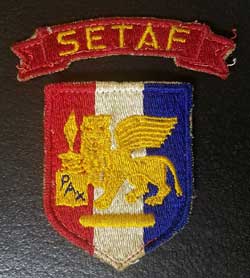
In August 2008, SETAF conducted its final airborne operation and shortly after, SETAF Soldiers replaced their maroon berets with black ones and replaced their airborne tabs with historic SETAF scrolls.
Then in early December 2008, the U.S. Ambassador to Italy and the Italian Minister of Foreign Affairs announced in Rome that SETAF officially assumed duties as the Army component headquarters for U.S. Africa Command. U.S. Army Africa, as the Army Service Component Command for U.S. Africa Command, strengthens the land force capabilities of African states and regional organizations, supports AFRICOM operations, and conducts decisive action in order to establish a secure environment and protect the national security interests of the United States. USARAF/SETAF remains available for deployment in support of NATO operations.
From October 2011 through January 2012, U.S. Army Africa was called upon to participate in Joint Task Force Odyssey Dawn and Odyssey Guard. With a coalition of more than a dozen nations, JTF-Odyssey Dawn assisted to enforce United Nations Security Council Resolution 1973 to protect civilians in Libya under threat of attack by Gaddafi regime forces. It also orchestrated the aero medical evacuation of 26 injured Libyan freedom fighters. In January 2012, by Department of Army general order, SETAF was officially re-designated USARAF/SETAF and further designated as an Army Service Component Command, connecting USARAF/SETAF to Ninth U.S. Army’s lineage, fitting USARAF/SETAF fully within the Army’s evolving structure for units above the division level.
From December 2013 to mid-September 2014, the Ebola virus had swept through Liberia, Guinea, and Sierra Leone, killing thousands and threatening to spread throughout western Africa and beyond. By order of the President of the United States, the U.S. Department of Defense established Joint Force Command–United Assistance as part of a unified-action approach to combat the growing Ebola threat. Formed with a core of soldiers from U.S. Army Africa, the Army Service component command for U.S. Africa Command, Joint Force Command–United Assistance reached a combined strength of 686 personnel before transferring responsibility to the 101st Airborne Division (Air Assault) on 25 October 2014.
In the years since USARAF’s inception, it has made progress through a consistent program of senior leader engagements and regionally focused activities. It has witnessed the restructuring of the African exercise program to address regional concerns, built multilateral relationships and supports a shared vision of 54 stable, secure nations. U.S. Army Africa, known also as Ninth U.S. Army, will continue the path of success and the command will remain in close collaboration with and responsive to our African and interagency partners in the years to come. The U.S. Army Africa team and its dynamic partners will continue to partner today for Africa tomorrow. America’s premier Army team dedicated to positive change in Africa.”
Credits US ARMY
|          |


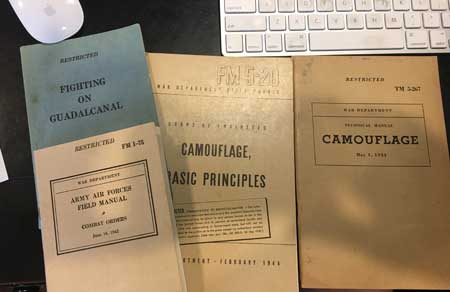
 Sons of Liberty Museum

 Army Air Corps Museum
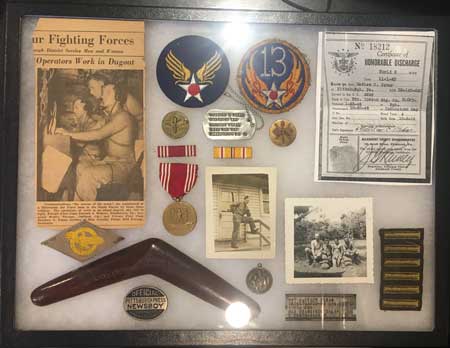 Matthew Pekar
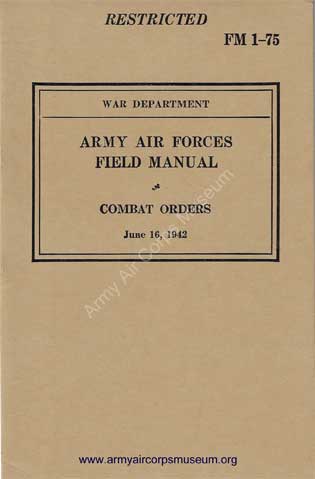 Issued by the War Department an Army Air Forces Field Manual on Combat Orders June 16, 1942.
 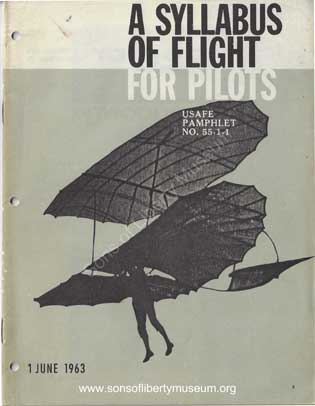 A Syllable of Flight For Pilots, 1963
 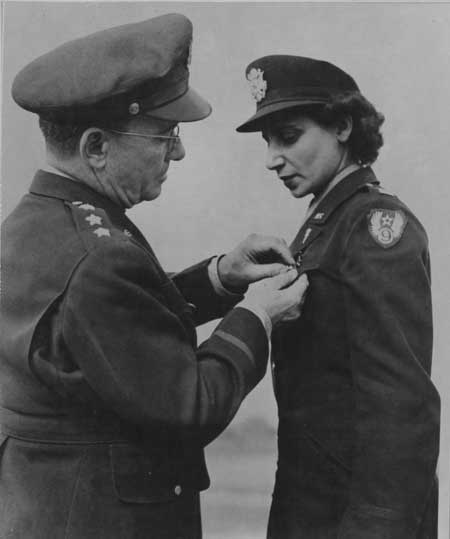 1st Lt. Josephine Sansone receives an Air Medal from Lt. General Lewis Brereton the commander of the 1st Allied Airborne Army. Ms. Sansone a light nurse with 9th Air Force Troop Carrier Command completed many flights aboard transports bringing wounded from the front to rear area evacuation hospitals.

 I was a navigator in the 459 Bomb Group 758 Bomb Squadron flying B-24’s from Torre Giulia Field, tower named ‘Coffee Tower’, a gravel airfield near Cerignola, on the Foggia Plains of Southeastern Italy during the period August 4, 1944 to May 16, 1945. I flew 50 combat missions over targets in Germany, Austria, Hungary, Poland, Yugoslavia and Northern Italy.
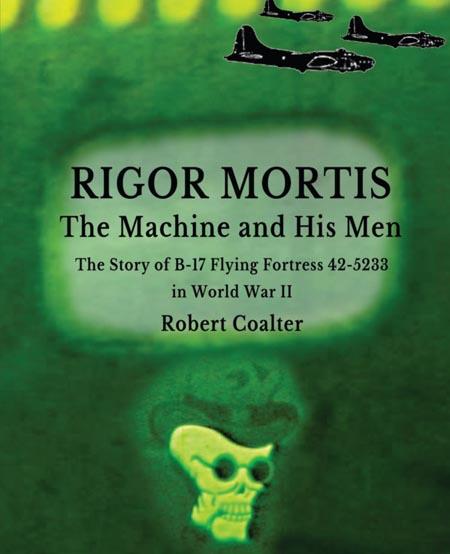 Most aircraft of World War II had pictures of sexy girls, tributes to sweethearts, songs and home. The planes were fondly referred to in a feminine manor. That was not the case with this B-17 tail number 42-25233. He was Rigor Mortis.
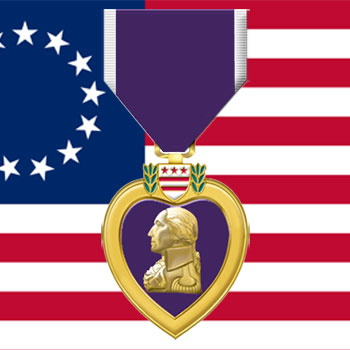 MIAs – Missing in Action
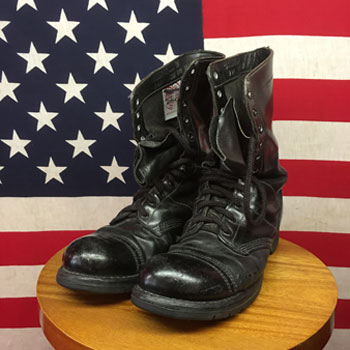 X-Files – Buried Unknowns
 Awards, Rosters Unit Documents
 Attention Website Owners & Veteran Associations